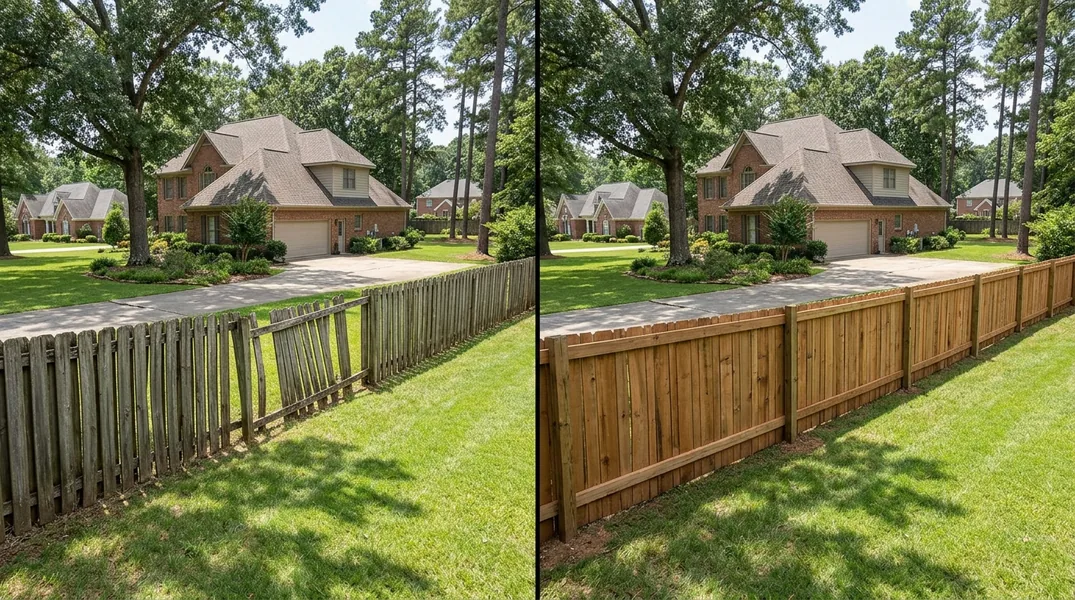
The Birmingham Problem: Red Clay Soil and Fence Failure
If you own a home in Birmingham, you've likely noticed something troubling about fences in your neighborhood. Many of them lean. Some tilt noticeably to one side. Others seem to be in a slow-motion collapse, their posts angling away from vertical year after year. This isn't a sign of poor craftsmanship alone, though that's sometimes a factor. The real culprit lies beneath the surface: the region's notorious red clay soil.
Birmingham's red clay is dense, heavy, and prone to shifting with moisture changes. During wet seasons, it expands and pushes against fence posts. During dry spells, it contracts and leaves gaps around the base. This constant movement destabilizes even well-installed fences. When you combine this soil behavior with wooden posts that have begun to rot, the result is almost inevitable: a leaning fence that gets worse with every season.
How Rotted Fence Posts Lead to Leaning Fences
A rotted fence post is the structural equivalent of a building's foundation cracking. Wood rot weakens the post from the inside out, reducing its ability to bear load and resist lateral pressure. In Birmingham's humid climate, wood decay happens faster than many homeowners realize. Posts that sit in contact with soil, especially in areas with poor drainage, absorb moisture year-round. Fungi thrive in these conditions, and the wood gradually loses its density and strength.
When a fence post begins to rot, it can't maintain its grip in the soil. The post becomes lighter and weaker, and the red clay around it continues to shift with seasonal changes. The combination of a weakened post and unstable soil creates the perfect storm for leaning. You might notice the lean gradually at first, a quarter inch here, a half inch there. But without intervention, the problem accelerates. The lean increases stress on nearby posts and fasteners, causing the entire fence line to destabilize. What started as one bad post can eventually compromise the entire fence structure.
Signs Your Fence Needs Post Repair or Replacement
Not every leaning fence requires a complete overhaul. Sometimes targeted fence post repair can restore stability and extend your fence's life by years. The key is catching the problem early. Look for these warning signs that indicate your posts need professional attention.
Visible lean is the most obvious indicator. If your fence panels are no longer plumb, or if the posts themselves angle away from vertical, decay or soil instability is likely at work. Softness at the base of the post is another red flag. Press a screwdriver or awl into the wood near ground level. If it penetrates easily or the wood feels spongy, rot has begun. Discoloration, particularly dark stains or areas where the wood appears wet even during dry weather, also suggests moisture infiltration and decay. Posts that move when pushed, or that seem to sink slightly into the ground, indicate compromised structural integrity. Finally, if you notice gaps appearing between the post and the rails, or if nails are pulling loose, your posts are likely shifting due to soil movement or rot.
Fence Post Replacement: When Repair Isn't Enough
Sometimes fence post replacement is the only solution. If rot has penetrated more than a quarter inch into the post, or if the post has lost more than 30 percent of its structural integrity, repair won't solve the problem. Replacing the post properly means more than simply yanking out the old one and setting a new one in the same hole. That's a recipe for repeating the same failure.
Professional fence post replacement requires careful planning, especially in Birmingham's challenging soil. The old post must be removed completely, along with the compromised soil around it. The hole should be dug deeper than the original and widened to allow for proper concrete footing. A new pressure-treated post, rated for ground contact, should be set in concrete that extends well above ground level. This prevents direct contact between the wood and soil, which is where most rot begins. The concrete also provides a stable base that resists the shifting of red clay better than soil alone. When done correctly, a replaced post can last another 15 to 20 years or more.
Preventing Future Fence Leans: Installation and Maintenance
The best approach to leaning fences is prevention. If you're planning new Wood & Privacy Fence Installation, the installation method matters enormously in Birmingham's soil conditions. Posts should be set in concrete footings that extend at least 12 inches above grade. This simple step eliminates the most common source of rot: direct soil contact. The concrete should slope away from the post to shed water. Posts should be pressure-treated lumber rated for ground contact, not standard lumber. Spacing should account for local wind loads and soil conditions, not just aesthetic preferences.
Maintenance is equally critical. Inspect your fence twice a year, in spring and fall. Look for the warning signs mentioned earlier. Keep gutters and downspouts directed away from the fence line to prevent water accumulation. If you notice small areas of rot or soft wood, apply a wood preservative or sealant. Trim vegetation growing against the fence to improve air circulation and reduce moisture retention. If you do spot a leaning post early, don't wait. Contact Birmingham Fence Company at (205) 855-6714 to discuss whether repair or replacement is the right choice. Early intervention costs far less than replacing an entire fence section.
Getting Professional Help: Leaning Fence Repair Near Me
If your fence is already leaning, professional assessment is essential. What looks like a simple problem on the surface often involves complex decisions about repair versus replacement, soil preparation, and material selection. Birmingham Fence Company has worked with hundreds of leaning fences throughout the area, and we understand the specific challenges that red clay soil presents. Our team can evaluate the extent of post damage, assess the stability of your entire fence structure, and recommend the most cost-effective solution.
Whether your fence needs targeted leaning fence repair or complete post replacement, we handle the job with the precision it requires. We remove old posts properly, prepare the soil correctly, and install new posts with concrete footings that will stand firm for decades. If you'd like a professional evaluation of your leaning fence, reach out for a free estimate. Call us at (205) 855-6714 or visit our website at https://birmingham-fence.com to schedule your consultation today.
Looking for a professional fence contractor in Birmingham? Birmingham Fence Company responds fast for all your fence needs.
Get a Free Quote